

Why Every Teacher Needs a Quick Grade Calculator
Grading can be one of the most time-consuming tasks a teacher faces, especially when you have large classes or numerous assignments to manage.Quick Grade But what if you could speed up the grading process, avoid errors, and still provide fair and accurate results for every student?
Enter the quick grade calculator — a tool designed to streamline grading and help you manage your classroom more efficiently. Whether you’re handling homework assignments, quizzes, or final exams, a quick grade calculator can be a game-changer. Here’s why every teacher needs one.
1. Save Time on Manual Calculations
As a teacher, time is precious. Manually adding up scores and calculating percentages for each student can take hours — and that’s just for one assignment. With a quick grade calculator, these calculations are done instantly.
- How It Works:
You input the scores and the calculator automatically computes the percentage, final grade, and even weighted averages based on your grading system. - Why It Saves Time:
You won’t have to spend hours on calculations or risk making mistakes. The calculator does the hard work for you, letting you focus on more important tasks like lesson planning and student engagement.
Tip: If you have a lot of assignments to grade, use a tool that integrates with your Google Sheets or LMS to quickly pull in grades and update records.YOU CAN ALSO READ:How to Save Time with a Quick Grading Calculator
2. Ensure Accuracy and Consistency
It’s easy to make mistakes when manually calculating grades, especially if you have hundreds of students or multiple assignments. A quick grade calculator eliminates human error and ensures that grades are accurate and consistent.
- How It Works:
A grade calculator follows preset formulas and rules, ensuring that the same calculations are applied to all students’ grades. - Why It’s Helpful:
You can trust that every student’s grade is calculated the same way, removing any bias or inconsistencies that can arise from manual grading.
Tip: Set up custom rules for weighted grades and rubric-based assessments to make sure your grading system is fair and consistent.Easy Grader,
3. Handle Weighted Grades with Ease
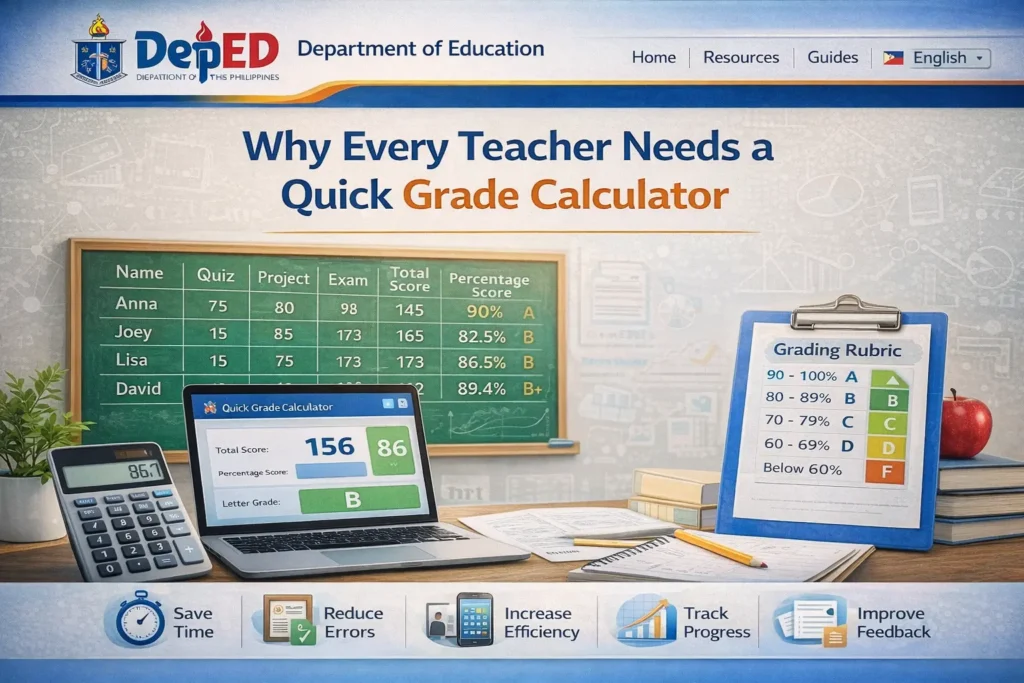
Many classrooms use weighted grading systems, where different assignments (e.g., homework, quizzes, exams) are assigned different percentages toward the final grade. Calculating these weights manually can be confusing, especially if students have multiple assignments with varying weight.
- How It Works:
A quick grade calculator allows you to set weightings for each category, such as homework (30%), exams (50%), and projects (20%). The calculator automatically applies these weights to each student’s scores. - Why It’s Helpful:
You don’t have to worry about manually calculating weighted averages. The calculator handles it all, ensuring accurate results for every student.
Tip: Double-check that the total of your weights adds up to 100% to avoid calculation errors.
4. Provide Instant Feedback
Feedback is a crucial part of the grading process, but it can be time-consuming. With a quick grade calculator, you can provide instant feedback for students, especially for assignments like quizzes or multiple-choice tests.
- How It Works:
After grading an assignment, the calculator can instantly generate feedback, such as “Great job!” for correct answers or “Review this concept” for incorrect answers. - Why It’s Helpful:
Instant feedback helps students understand where they went wrong and gives them a chance to improve before the next assignment.
Tip: Use a comment bank for frequently used feedback phrases to speed up the feedback process.
5. Track Student Progress Over Time
A quick grade calculator doesn’t just help with individual assignments; it can also help you track student progress over time. Many calculators and gradebooks let you track how students are performing across multiple assignments, tests, and projects.
- How It Works:
The tool aggregates data from all assignments and automatically calculates class averages, showing you trends in performance. - Why It’s Helpful:
Tracking student progress helps you identify areas where students are struggling and where they excel. This allows you to adjust your teaching approach and offer more targeted support.
Tip: Look for a calculator that provides visual graphs or reports to quickly assess how your class is performing overall.
6. Easy Reporting and Sharing with Students

At the end of each grading period, you need to report final grades to your students, parents, or administrators. A quick grade calculator allows you to generate detailed reports that show final grades, class averages, and individual student performance.
- How It Works:
The calculator can generate reports that summarize the grades, making it easy to share the results with students or export them to your gradebook. - Why It’s Helpful:
It saves you the hassle of manually entering final grades and helps you communicate grade results efficiently.
Tip: Use a grading tool that allows you to export reports in different formats (PDF, Excel, etc.) to easily share them with others.
Best Quick Grade Calculators for Teachers
If you’re ready to start using a quick grade calculator, here are some great options to consider:
- Google Sheets + Add-ons (Flubaroo, Gradebook): Free and customizable, integrates well with Google Classroom.
- GradeHub: Simple, user-friendly, and ideal for managing grades and tracking progress.
- Quizizz: Great for quizzes and instant feedback.
- Gradescope: Best for rubric-based grading and handling large amounts of assignments quickly.
(FAQs)
1. Are quick grade calculators free to use?
Many quick grade calculators are free, especially tools like Google Sheets and Quizizz. Some premium features or advanced tools may require a subscription.
2. Can I use quick grade calculators for all types of assignments?
Yes! Quick grade calculators work for multiple-choice quizzes, essays, projects, and even weighted assignments. Some tools support rubric-based grading for subjective tasks.
3. How do I handle weighted grades in a quick grade calculator?
Most quick grade calculators allow you to assign weights to different categories (e.g., exams, homework), and they automatically calculate the final grade based on those weights.
4. Can I track student progress with a quick grade calculator?
Yes! Many tools offer analytics dashboards or progress tracking to give you an overview of how each student is performing over time.
5. Can quick grade calculators handle large classes?
Yes! Quick grade calculators are ideal for large classes, as they can handle multiple students and assignments without slowing down. Many tools also support bulk grading for multiple-choice assessments.
Final Thoughts
Grading doesn’t have to be a stressful, time-consuming task. With a quick grade calculator, you can save time, ensure accuracy, and provide meaningful feedback to your students. By automating calculations, handling weighted grades, and offering progress tracking, these tools help make grading easier, faster, and more consistent.
Start using a quick grade calculator today to simplify the grading process and spend more time on what you do best — teaching!


