

Teachers: Automate Grading with This Easy Calculator
(A Simple, Helpful Guide)
Grading can feel like the biggest time suck in teaching. Between essays, quizzes, homework, and exams, it’s easy to spend hours just crunching numbers. Quick Grade, But what if you could cut that time way down — and still give accurate grades?
That’s where an easy grading calculator comes in. These tools help you automate the math so you can focus on what matters — teaching.
Let’s break it down in a friendly way, so you can start using this today and save yourself time.
What Is a Grading Calculator?
A grading calculator is a tool (usually online) that figures out student grades for you.
Instead of doing math by hand or writing formulas in a spreadsheet, you plug in scores and weights and boom — it calculates the final grade.
Whether your class uses points, percentages, or weighted categories, a good calculator can handle it.
Why Teachers Should Use a Grading Calculator
Here’s why teachers love using grading calculators:
Save Time:
No more manual math. Enter scores once and let the calculator do the work.
Avoid Mistakes:
Human math errors happen — especially under stress. This tool keeps results accurate.
Consistent Grading:
It applies the same rules to every student so grades stay fair.
Easy What‑If Scenarios:
Want to know what a student needs on the final to pass? The calculator tells you instantly.
How to Use a Grading Calculator in Minutes
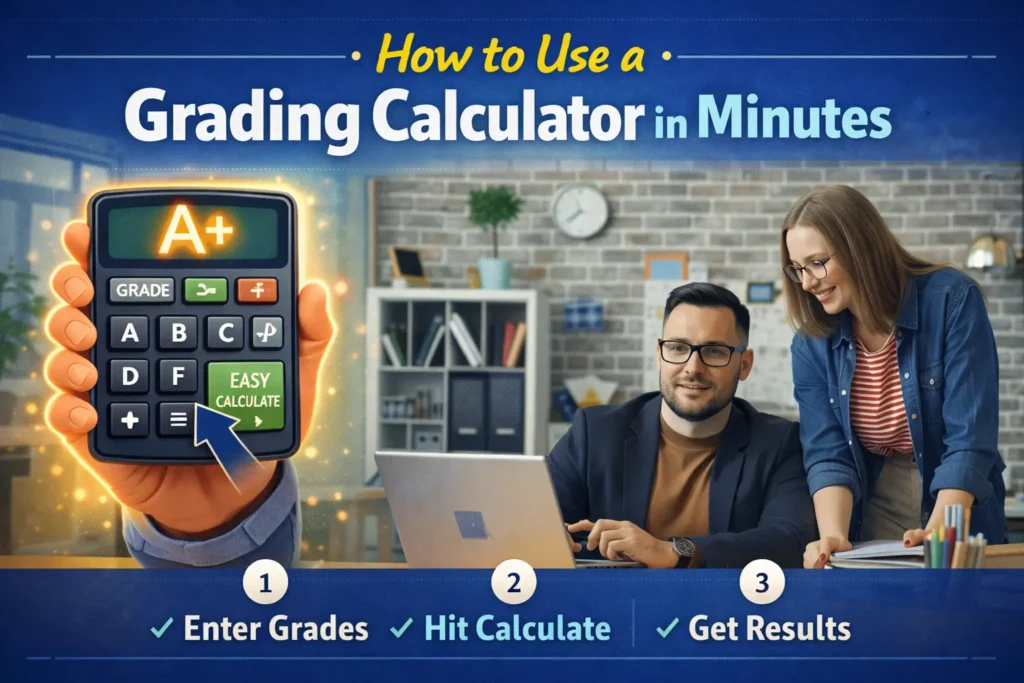
Using a grading calculator is easier than you think. Here’s how:
1. Enter Scores
Type in each student’s scores from tests, quizzes, homework, etc.Easy Grader,
2. Add Weights
Many classes give different importance to different tasks. For example:
- Homework: 20%
- Quizzes: 30%
- Exams: 50%
Put those percentages into the calculator so it knows how to balance the grade.
3. Hit Calculate
Once everything is entered, the calculator gives you the final grade instantly.
That’s it. No formulas, no spreadsheets, no headaches.
Quick Tips for Best Results
Check Your Weights First
Make sure the percentages add up to 100%. If they don’t, the calculator won’t give the right result.
Use Consistent Scales
If some scores are in points and others in percentages, convert them before entering them.
Save Your Entries
Many teachers keep a screenshot or export results so they can reference them later.
What Teachers Can Automate With This Tool
These tools can help with:
Final Grades:
Calculate end‑of‑term grades before report card day.
Progress Checks:
See how a student is doing midterm.
Goal Tracking:
Show students what they need to score on future work to reach a target grade.
Re‑Grading Scenarios:
If a student retakes a quiz, update the score and recalc instantly..YOU CAN ALSO READ: How to Use Quick Grading Calculators for Reports
(FAQs)
1. Can a grading calculator handle weighted grades?
Yes! That’s one of the main benefits. You enter how much each part of the class counts, and the calculator does the weighted math for you.
2. Do I need special software to use one?
No. Most grading calculators work right in your web browser — no download needed.
3. Can students see the results?
Some calculators let you share results with students, or you can export the grade list to send to them.
4. Is this tool good for all subjects?
Yes. Whether you teach math, English, science, or history, a grading calculator works the same way.
5. Are these tools free?
Many grading calculators are completely free for teachers to use.
Final Thoughts
If grading feels slow and exhausting, you’re not alone. Teachers everywhere are turning to easy grading calculators to simplify the process, avoid mistakes, and free up time for the parts of teaching they love most.
There’s no complex setup or special training needed. Just enter the scores, set up your weights, and let the calculator do the rest. Before you know it, you’ll be grading in minutes instead of hours.


