

How to Build a Fair Classroom Grade Scale 2026
Grades matter. They show students how well they’re doing and guide them on what to improve. But creating a fair classroom grade scale can be tricky. Quick Grade, A grade scale should reward effort, reflect learning, and give every student a clear picture of their progress.
In this guide, I’ll explain how to build a fair grade scale, the steps to follow, and tips to make sure it’s transparent and consistent.
What Is a Classroom Grade Scale?
A grade scale is the system you use to turn scores into grades. For example:
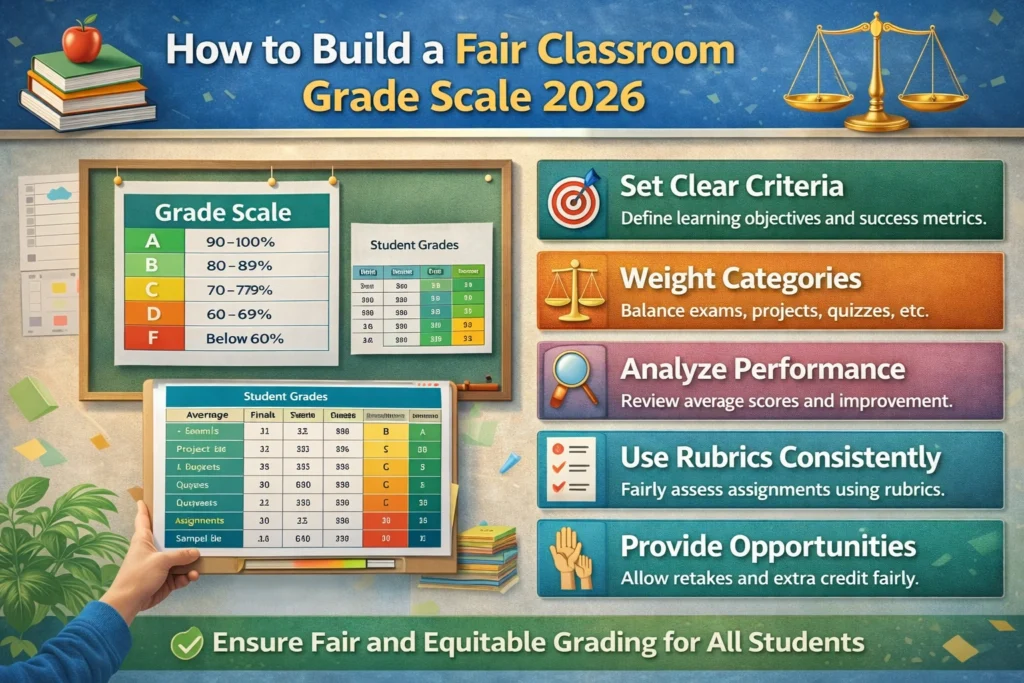
- 90–100 = A
- 80–89 = B
- 70–79 = C
- 60–69 = D
- Below 60 = F
Grade scales can be simple, weighted, or curved, depending on your teaching style and class goals.
Steps to Build a Fair Grade Scale
1. Decide on Grading Categories
Think about what counts toward the final grade. Common categories include:
- Tests and quizzes
- Homework and assignments
- Class participation
- Attendance
- Projects or presentations
Decide whether all categories are equally important or weighted differently.
2. Assign Weights (Optional)
If some categories matter more, assign a weight to each. For example:
- Tests: 50%
- Homework: 20%
- Participation: 20%
- Attendance: 10%
Weights should add up to 100%. This helps reflect the importance of different types of work fairly.
3. Define Grade Ranges
Set clear score ranges for each letter grade or numeric grade. Make sure ranges:
- Cover all possible scores
- Are realistic based on your assessments
- Reflect learning objectives
You can also consider plus/minus grades, like B+, B, and B-, to give more detailed feedback.You can also read: How to Use a Grade Calculator for Retakes
4. Consider Curves or Minimum Grades
Curving grades or setting minimums can make a grade scale fairer when:
- A test was unusually hard
- Scores are clustered too low
- One missing assignment shouldn’t ruin the grade
Choose a method that is consistent and easy to explain.
5. Communicate Your Scale
Share your grading scale with students at the start of the course. Transparency helps students understand:
- How they’ll be evaluated
- What they need to improve
- How each category affects their final grade
Tips for a Fair Classroom Grade Scale
- Be consistent: Use the same rules for all students.
- Be realistic: Grade ranges should match the level of difficulty and learning expectations.
- Use tools: Spreadsheets or grade calculators help avoid errors.
- Review periodically: Adjust your scale if assignments or assessments change significantly.
- Consider mastery: Focus on learning and improvement, not just raw points.
FAQs
1. Should all assignments have the same weight?
Not necessarily. Bigger assessments like tests or projects often carry more weight than homework or participation.
2. What is a curved grade scale?
A curved scale adjusts grades based on class performance, ensuring fair distribution when assessments are very hard or very easy.
3. How do I make a grade scale transparent?
Provide students with a clear chart of grade ranges and explain how each category contributes to the final grade.
4. Can students improve grades after a poor test?
Yes. Weighted categories, extra credit, or allowing make-up work can help reflect overall learning fairly.
5. Is a numeric grade scale better than letter grades?
It depends. Numeric scales provide precision, while letter grades are easier for students to interpret.
Final Thoughts
Building a fair classroom grade scale is about balance. You want to reward effort, reflect learning, and communicate clearly with students. By defining categories, assigning weights, setting ranges, and being transparent, your grading system will be fair, consistent, and motivating.


