

Easy Grader for Standards and Mastery Scores
Teaching and grading is changing. Traditional point systems still work, but more schools are moving toward standards‑based and mastery grading. Instead of averaging everything together, these approaches focus on what students actually know and can do — not on how many points they earned on a random mix of tests, Quick Grade homework, or quizzes.
This guide shows you what an Easy Grader for standards and mastery scores is, how it works, and how to use it to make your grading fairer, faster, and easier — even with a big class.
What Are Standards and Mastery Scores?
In traditional grading, you might give a test with 100 points and average everything together. In standards or mastery grading, you score students on specific learning goals or standards, such as:
- “Understands fractions”
- “Can write a clear paragraph”
- “Solves multi‑step equations”
Instead of a single percentage, students earn a mastery level for each standard. For example, they might be labeled:
- Beginning
- Developing
- Proficient
- Advanced
This approach lets teachers and families see exactly what a student has mastered and what needs more work. The focus shifts from points to learning outcomes.
What Is an Easy Grader for Standards and Mastery?
An Easy Grader for Mastery and Standards Scores is a tool that helps educators calculate and track these mastery levels quickly. Instead of doing all the math by hand or guessing how to roll many scores into one overall mark, the tool lets you:
- enter standards or learning targets
- enter student performance on each standard
- calculate overall mastery scores
- track growth over time rather than just average points
This makes your gradebook meaningful and easy to interpret for teachers, students, and parents alike.
How Standards and Mastery Grading Works
There are a few choices you can make when calculating mastery scores. Most easy grading tools let you choose how to combine multiple attempts or scores on a standard:
Most Recent Score
Uses the most recent performance on a standard — what the student knows now.
Highest Score
Uses the best performance the student has shown. This rewards growth and improvement.
Average or Mode
Calculates a middle value or most common score on the standard.
The method you pick depends on your grading philosophy. If you want to reward improvement and make reinforcements clear, picking most recent or highest can be helpful.
Step‑by‑Step: How to Use an Easy Grader for Mastery Scores
Here’s a friendly way to set this up:
Step 1 – Define Your Standards
Write down what each learning standard means in plain language. For example:
- “Can explain the main idea of a paragraph”
- “Solves a quadratic equation correctly”
Clear descriptions help both teachers and students know what mastery looks like.
Step 2 – Enter Student Scores
Instead of points, enter a performance level for each standard. You might enter:
- 4 = Advanced
- 3 = Proficient
- 2 = Developing
- 1 = Beginning
Step 3 – Choose a Calculation Method
Decide if your grading system uses most recent, highest, average, or another method to combine standard scores into overall mastery.You can also read: How to Use an Easy Grader With Decimals (Simple Guide)
Step 4 – Review and Share
Look at your class results. Share clear mastery data with students and parents so everyone understands where each student is on each standard.
Why This Approach Works Better
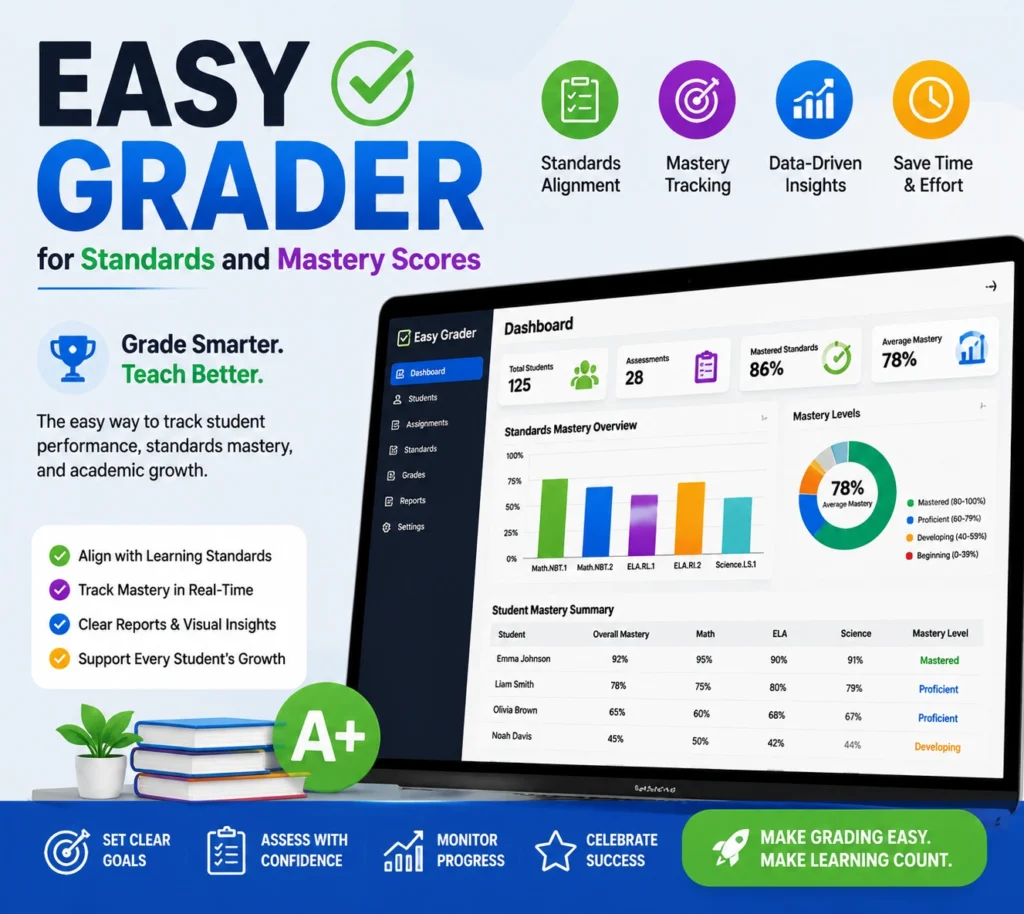
Here’s why many educators prefer standards and mastery grading:
Focus on Learning
Grades reflect skills and understanding — not just points.
Helps Students Improve
Students know exactly what they need to work on, encouraging growth over time.
Fairer Evaluation
Early mistakes don’t drag down a grade forever — mastery reflects current ability.
Useful Feedback
The detail helps you tailor instruction to each student’s needs.
Tips to Make It Even Easier
Here are a few practical tips educators love:
- Create a simple rubric for each standard so scoring is consistent.
- Use digital tools or gradebooks that support standards‑based grading.
- Show students a mastery scale so they know what each level means.
- Allow reassessment when students want to show improved mastery.
FAQs
1. How is mastery grading different from traditional grading?
Mastery grading focuses on whether students understand specific standards rather than averaging points from all assignments.
2. What do mastery levels mean?
They are categories like Proficient or Developing that describe how well a student meets a standard.
3. Can students improve their mastery score after reassessment?
Yes. Most mastery systems allow reassessments so students can improve their scores.
4. Do mastery scores convert to traditional grades?
They can. Many systems allow conversion to letters or percentages for report cards if needed.
5. Does this work for big classes?
Absolutely. Tools that support mastery scoring and calculation make it easy even with many students.
Final Words
Using an Easy Grader for standards and mastery scores gives you a clearer, fairer, and more meaningful way to assess learning. Instead of guessing what an average percentage means, you see exactly what students can do. This helps teachers target instruction, gives students clear goals, and makes feedback more useful. With the right tools and simple setup, standards and mastery grading can change the way you think about grading — from just counting points to truly measuring learning.


