

How to Calculate Final Grades with Bonus Work: 2026
Calculating final grades for your students can sometimes be a tricky task, especially when you’re factoring in bonus work. Bonus work can be a great way to help students improve their grades, reward extra effort, or make up for missed opportunities. Quick Grade, But how do you calculate these final grades while including bonus points? Let’s break it down in simple steps!

What is Bonus Work?
Bonus work is additional assignments, projects, or tasks that students can complete to earn extra points. These points are typically added to the student’s final grade and can help improve their overall performance. Bonus work is optional, so students are not required to complete it. However, it’s a great way to encourage engagement and offer a second chance for those who may have struggled during the semester.
Why Include Bonus Work in Final Grades?
- Incentivize Effort: Bonus work rewards students who go above and beyond, encouraging a growth mindset.
- Increase Fairness: It can help students who have had difficulty during the term but show improvement with extra effort.
- Motivate Students: Offering bonus points can increase student motivation to stay engaged with the material, even when they’re struggling.
How to Calculate Final Grades with Bonus Work
Calculating final grades with bonus work doesn’t have to be complicated. Follow these simple steps:
Step 1: Calculate the Regular Grade
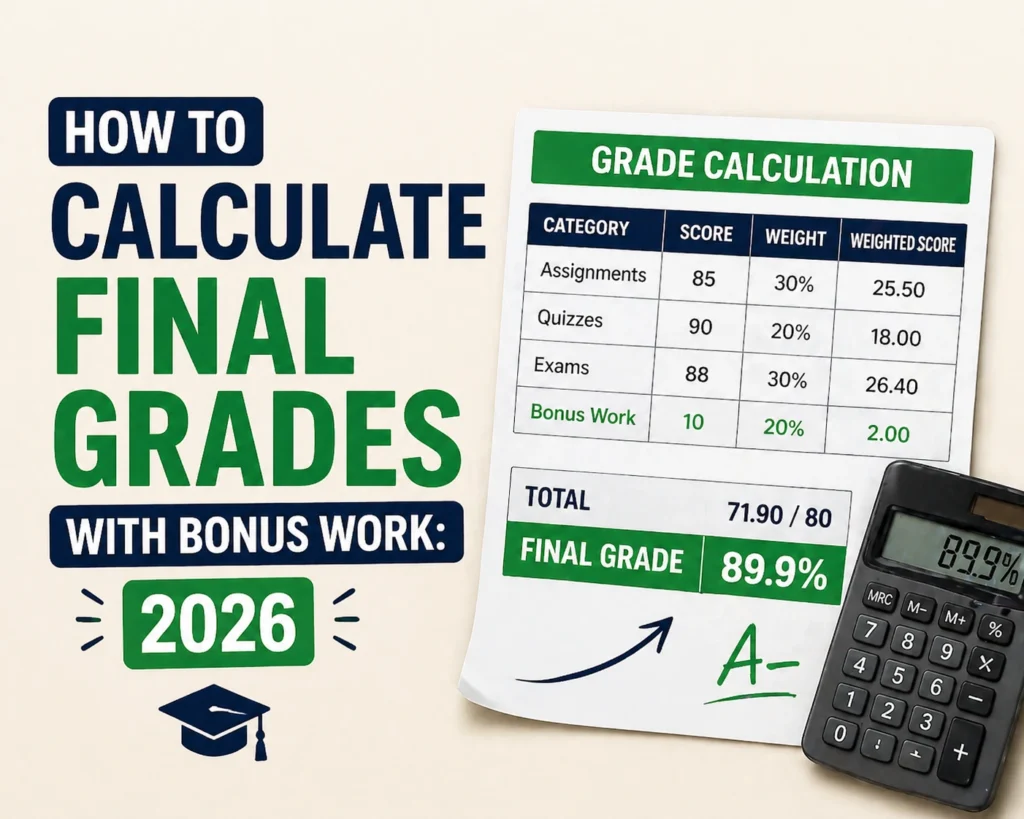
Start by calculating the student’s regular grade based on the assigned weights of each exam, quiz, or assignment. For example, if the final exam is worth 40%, the midterm 30%, and homework 30%, you’ll multiply the grade percentages for each component by their respective weight.
Here’s an example:
- Homework (30%): 85%
- Midterm (30%): 90%
- Final Exam (40%): 80%
To calculate the final grade without the bonus points:Grade Calculator for International Grade Scales: 2026
- Homework = 85% × 0.30 = 25.5
- Midterm = 90% × 0.30 = 27
- Final Exam = 80% × 0.40 = 32
Add them together:
25.5 + 27 + 32 = 84.5% (This is the regular grade without bonus work).You can also read:
Step 2: Add Bonus Points
Once you have the regular grade, you can add any bonus points that the student has earned from bonus work. Bonus points are usually a fixed number or a percentage of the total grade.
For example, if a student completes bonus work worth 5 extra points, you can simply add these to the regular grade. If the bonus points are a percentage, say 5% of the total grade, you’ll calculate it by multiplying the total grade by the percentage.
Example with Fixed Bonus Points:
- Regular Grade: 84.5%
- Bonus Work: 5 points
- Bonus Grade = 84.5% + 5 points = 89.5%
Example with Bonus as a Percentage:
- Regular Grade: 84.5%
- Bonus Percentage: 5%
- Bonus Points = 84.5 × 0.05 = 4.225
- Bonus Grade = 84.5 + 4.225 = 88.725%
Step 3: Finalize the Grade
Once you’ve added the bonus points, your final grade is ready. This is the grade that you’ll record for the student.
Step 4: Communicate Clearly with Students
Make sure to clearly communicate the bonus work policy and how it will affect their final grade. Some students may not understand how the extra points will be factored in, so it’s always good to provide an explanation.
Tips for Using Bonus Work Effectively
- Set Clear Guidelines: Ensure that students understand what qualifies as bonus work and how many points they can earn.
- Keep It Fair: Bonus work should be optional and designed to reward extra effort, not to compensate for poor performance.
- Be Transparent: Explain how bonus work affects final grades, and provide students with an easy-to-understand breakdown of how their final grade is calculated.
- Offer a Variety of Bonus Work Options: Different students have different strengths. Offer a variety of bonus work types, such as research papers, creative projects, or additional quizzes, to allow everyone a fair chance to earn extra points.
FAQs
1. Can bonus work be used to replace failed assignments?
Bonus work is typically intended to supplement a student’s grade, not replace a failed assignment. However, if your grading policy allows, you can offer bonus work as a way for students to improve their overall grade, especially if they’ve missed an important assignment or exam.
2. How many bonus points can I give to a student?
The number of bonus points you give should depend on your grading policy. Many teachers limit bonus work to a small percentage of the total grade, usually around 5-10%. This ensures that bonus work doesn’t overshadow the regular grading components.
3. Are bonus points included in the GPA calculation?
It depends on the institution’s policy. In most cases, bonus points are included in the overall grade but may not directly affect the GPA unless specified by your school or university’s grading system.
4. Can bonus work be used to boost a student’s final grade if they have already scored well?
Yes, bonus work can still boost a student’s grade, even if they have already scored well. Bonus work rewards extra effort, but it should not be used to dramatically change a grade that is already high. It’s a way to recognize students who go above and beyond.
5. How do I ensure that bonus work is fair to all students?
To ensure fairness, provide clear instructions about what qualifies as bonus work and how many points can be earned. Bonus work should be optional, transparent, and accessible to all students, giving everyone an equal opportunity to improve their grade.
Conclusion
Calculating final grades with bonus work doesn’t have to be stressful. By following the simple steps above, you can easily integrate bonus work into your grading system. Bonus work is an excellent way to motivate students and provide them with opportunities to improve their grades. Just remember to keep things clear, fair, and transparent, and your students will appreciate the chance to boost their scores!


